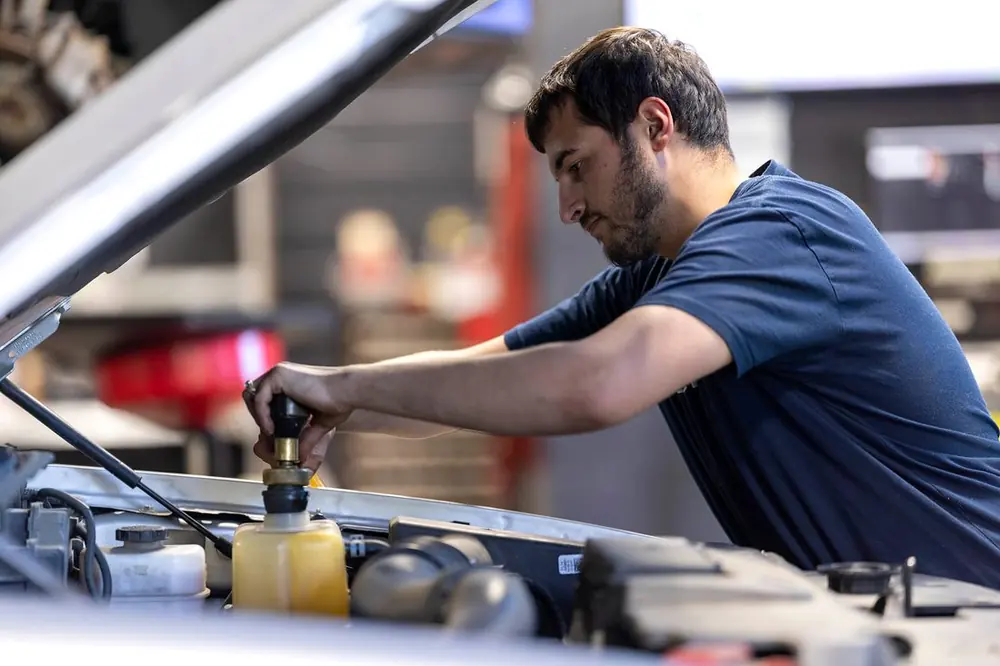
How often should your brakes be inspected? Have your brakes inspected at least once a year, and any time you hear a noise, feel a shake or notice a change in the pedal. A brake inspection checks pads, rotors, calipers, lines and fluid, so small wear gets fixed before it turns into a bigger repair.
Why inspections matter
Brakes wear a little each time you use them. Skipping checks can mean less stopping power, longer stopping distances and uneven wear on tires and brake parts. Early checks keep repairs small.
What makes up your brake system
- Pads and shoes: create friction to slow the car.
- Rotors and drums: what the pads and shoes press against.
- Calipers and wheel cylinders: apply the pressure.
- Brake lines and fluid: carry that pressure. Fluid can get contaminated over time.
Warning signs
- Squealing or grinding when you brake
- A soft or sinking pedal
- The car pulling to one side
- Shaking in the steering wheel or pedal
- A brake warning light
What we check
A brake inspection looks at pads, shoes, rotors, drums, calipers, lines and fluid. We tell you what's worn, what's fine and what can wait. See our brake repair service.
Why fix brakes early
Worn pads can damage rotors, which makes the repair cost more. Staying ahead of wear is safer and easier on your wallet.
You can need brakes without hearing a noise
When we ask customers with major brake failures why they waited, the answer is usually the same. The brakes weren’t making noise, so they didn’t know. Many newer cars have a wear sensor in the pad that turns on a light, but a regular inspection is still the surest way to catch it.
Two cases from our shop
A Subaru that sat a lot. The brake pads froze in their slides, so the brakes never fully released. It was like driving with the brakes on. The outer pad wore through the backing plate and the caliper rubbed the rotor. We replaced a caliper, pads and rotors. Catching it early would have cost far less.
A Nissan with a soft pedal. Our technician barely made it out of the lot before he knew something was wrong. The pads were gone and the backing plate had ground through the rotor. We replaced pads, rotors and both rear calipers, plus a frozen, rotted parking brake cable.
What a good brake job includes
Most cars need new pads or shoes and either machined or new rotors. Pads have to slide freely in the bracket, so we clean and lubricate the contact points and caliper slides on every brake job, and never where the pad meets the rotor. Without that, pads stick, wear unevenly, pulse or make noise. Brake fluid needs attention over time too.
Why we inspect before we quote
A driver once asked for a phone price on front brakes. When the car arrived, the pads were worn through, the calipers were ruined and the rear brakes were grinding too. A fair brake price needs a look at the car. Brake repairs carry 12 months or 12,000 miles, and our labor is guaranteed for life.
Questions we hear
How often should brakes be inspected?
At least once a year, or any time you notice noise, vibration or a change in the pedal.
Why are my brakes squealing?
It can be a wear indicator on the pads. Have them checked soon.
Can I pay over time?
Yes. Our 0% for 90 days payment plan has same day approval.
Book a brake check online or visit our West Springfield shop. Schedule now.